Blog Summary
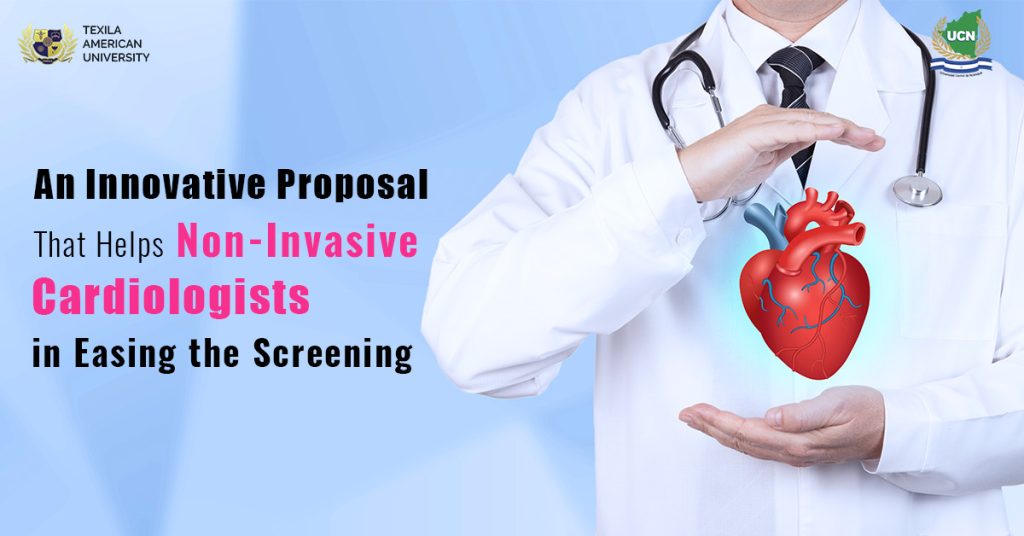
Presently ECGs pick up electrical signals, monitor heart rhythm and help diagnose heart conditions. Besides, they record heart activity during a particular period. Integrating doppler technology, AI and ECG to detect minor blockages at the initial stages, monitor heart activity over a period of time and make comparisons with data mapping techniques helps predict future heart conditions and is cost-effective.
Non-invasive cardiology gains prominence because of the ability to detect heart diseases and take precautionary measures before it gets worsened. The increase in cardiovascular disease (CVD) death rate makes it the need of the hour. It is the main motivation to propose an easy-to-use instrument with low cost that helps in the early detection of such diseases. This proposal mainly concentrates on the core problem in the early screening of cardiovascular diseases.
Non-invasive cardiologists are specialized healthcare professionals who focus on diagnosing and treating heart conditions without resorting to invasive procedures. They primarily rely on non-invasive diagnostic tools and techniques to evaluate the condition of the heart. In the context of your question, a non-invasive cardiologist can provide valuable insights and suggestions for cost-effective methods to diagnose heart diseases in the rural sector.
Upon considering the disadvantages of the currently available instruments, a new idea has been proposed, which can overcome these problems.
In Dibrid technology, the ECG is related to the electrical activity of the heart. Any prominent changes can be observed only when the heart is abnormal. In Doppler technology, we can detect even minor blockages even before the heart reaches abnormality. Based on the above facts, a decision has been made to concatenate the above two working principles in this model that provides a better-confirmed report based on the artificial intelligence algorithm. The added advantage of this model is that we can bring in the history of the subject’s status (through ECG) and the present scenario (through Doppler image mapping), which makes the database more stable for predicting the future.